 Book Appointment

Table of Contents
- Introduction
- What Leads to a Bulky Uterus? The Most Frequent Disorders
- Symptoms of a Bulky Uterus: What to Watch For
- How a Bulky Uterus Affects Fertility
- Diagnosis: Bulky Uteruses
- Treatment of Bulky Uteruses
- Frequently Asked Questions
Introduction
“I have a bulky uterus.” As a gynaecologist and a fertility specialist, I have seen even the most composed patients become more anxious after hearing these words. I don’t blame patients for feeling this way; however, I reassure patients that a bulky uterus is a diagnosis, not a disease. It simply means the uterus is larger than the average size. In most instances, the cause is completely treatable. For women who have heavy periods, pain in the pelvis, and difficulties in getting pregnant, seeing the right expert is of utmost importance. Many patients of mine who have explored IVF treatment in Srinagar most of the time came to me with a bulky uterus that was causing hindrance to their fertility.
In the absence of pregnancy, a normal adult uterus is considered to be larger than 8 cm in length, 5 cm in width, and 4 cm in thickness. Research shows that a bulky uterus affects 10% of women around the world who are of reproductive age. Still, most of these women remain undiagnosed for a long time.
What Leads to a Bulky Uterus? The Most Frequent Disorders
The most influential factor is the underlying cause. This determines the symptoms you have, your chances of having a child, and the best treatment approach to take.
Uterine fibroids: The most prominent cause is uterine fibroids, which can occur in as many as 80% of women by the age of 50. These are benign neoplasms of smooth muscle that form in or around the wall of the uterus. The submucosal fibroids that extend into the cavity of the uterus are the ones that most interfere with fertility and the menstrual cycle. The intramural fibroids that are in the wall of the muscle cause the uterus to feel enlarged uniformly.
Adenomyosis: Of the many possible causes I have seen, I would suggest that most of the cases of adenomyosis are the most frequently misdiagnosed. In this condition, tissue that lines the uterus (the endometrium) occurs within the muscle of the uterus. This leads to swelling and thickening of the muscle. The women I have encountered with adenomyosis have cycles that are described as intolerable, with extreme pain and flooding of blood, and a feeling of pressure in the pelvis that is chronic.
In addition, it greatly decreases the receptivity of the endometrium, which is one of the reasons I assess the anatomy of the uterus meticulously prior to any IVF. In such cases, the importance of uterus health and the treatments aimed at that are especially warranted.
Endometrial Hyperplasia: Abnormal thickening of the uterine lining due to unopposed estrogen, which is common in cases of PCOS and in the perimenopausal stage of a woman’s life.
Uterine Polyps: Non-cancerous growths in the lining of the uterus, which can lead to irregular bleeding and cause the uterus to appear mildly enlarged.
PCOS: This condition is characterized by the disruption of hormonal levels, leading to the prevention of the normal shedding of the endometrial lining.
Perimenopause: The uterine muscles may become thickened as a result of temporary hormonal fluctuations.
Endometrial Cancer: This condition is rare but must be considered when dealing with post-menopausal women.
Symptoms of a Bulky Uterus: What to Watch For
| Symptom | How it Presents |
| Heavy menstrual bleeding | Soaking pads rapidly, large clots, prolonged periods |
| Pelvic pressure or pain | Fullness, heaviness, or dull ache in the lower abdomen |
| Frequent urination | Uterus pressing on the bladder |
| Abdominal Bloating | Visible distension with large fibroids |
| Anaemia and Fatigue | From chronic blood loss |
| Painful Intercourse | Common with adenomyosis and posterior fibroids |
| Fertility Difficulties | Trouble conceiving or recurrent miscarriage |
I must be honest with you: many women have no symptoms whatsoever. Their bulky uterus is discovered entirely by chance during a routine ultrasound. The absence of symptoms doesn’t mean the absence of impact, especially when fertility is a concern.
How a Bulky Uterus Affects Fertility
The first stage bulking uterus impacts the woman’s ability to conceive, as the cause of the bulge has multiple factors that impact the location of the abnormality within the structure of the uterus.
In the case of fibroids, which are submucosal, these fibroids affect the cavity of the uterus, which prevents the embedding of an embryo and increases the chances of a miscarriage. Conversely, adenomyosis, which involves the endometrium, restricts the supply of blood, making it less favorable and receptive to the embedding of an embryo. To illustrate, several recurrent cases of IVF were traced to the fact that these women had undiagnosed adenomyosis.
The presence of a bulky uterus doesn’t controvert the fact that a woman, in most cases, can conceive naturally, especially when the fibroids are small. In our practice, we have emphasized the understanding of the role of estrogen in the health of the female reproductive system and how it affects the behavior of the endometrium and fibroids and it, therefore, explains why it is a priority therapeutic step.
At Valley Fertility Centre, we have made it a policy to always conduct a comprehensive assessment of the uterus as part of our pre-treatment evaluation, in that pre-treating the uterus before an IVF cycle increases the chances of success.
Diagnosis: Bulky Uteruses
Diagnosis starts with a pelvic exam, while imaging studies give a more definite diagnosis:
- Transvaginal Ultrasound: The first test conducted in a patient with a suspected bulky uterine condition, transvaginal ultrasound quickly and noninvasively demonstrates the size of the uterus, the location of fibroids, ovarian morphology, and the thickness of the endometrium.
- MRI: Gold standard imaging for detailed fibroid mapping and the diagnosis of adenomyosis prior to surgery.
- Hysteroscopy: Visual inspection of the uterine cavity by means of a camera. Polyps and submucosal fibroids are often excised in the same procedure.
- Endometrial Biopsy: Surgical sampling and tissue diagnosis of hyperplasia or malignancy, particularly in the presence of aberrant uterine bleeding or in postmenopausal women.
The picture is completed by a blood count to check for anaemia, a hormonal profile, and a thyroid function test.
Treatment of Bulky Uteruses
Treatment depends on the underlying cause, symptoms, and whether the patient wants to keep her fertility. Medical therapy includes:
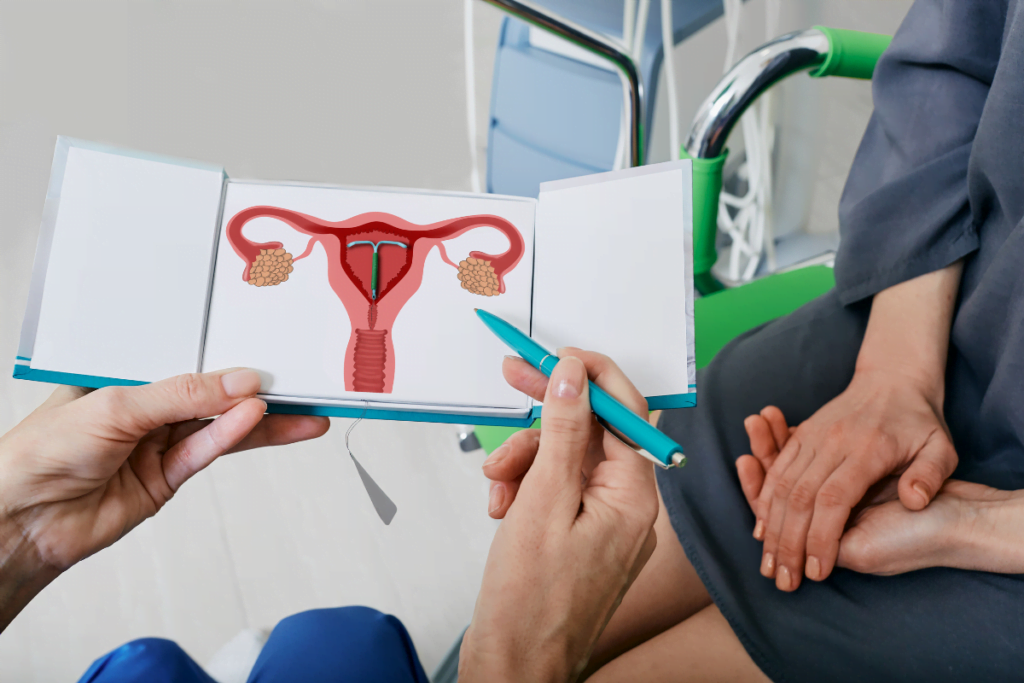
- Levonorgestrel IUD (Mirena) for the control of fibroid or adenomyosis-related heavy menstrual bleeding
- GnRH agonists to help achieve a functional shrinkage of fibroids in preparation for surgical intervention
- Progestins for endometrial hyperplasia
- Tranexamic acid for the management of acute heavy bleeding
Less invasive options include:
- Hysteroscopic Resection: This is the removal of a submucosal uterus and polyps with no external incision. Recovery is in days and not weeks.
- Uterine Artery Embolisation (UAE): While a woman still wants to undergo surgery, it is the best method to go about preserving the uterus, because it cuts off the blood supply to the fibroids and allows them to shrink over a period of 3 to 6 months.
- Endometrial Ablation: While a woman is still wanting to undergo surgery, it is the best method to go about preserving the uterus, because it cuts off the blood supply to the fibroids and allows them to shrink over a period of 3 to 6 months.
Surgical treatment options include the following:
- Myomectomy: This is a surgery to remove the fibroids and preserve the uterus. This is the fertility-sparing option for those women who wish to conceive.
- Hysterectomy: This is a complete removal of the uterus and is the most definitive option. It is done for severe cases and when childbearing is completed.
In addressing issues of the uterus for women who are considering pregnancy, I recommend exploring natural ways to improve the health of the uterus. This can prove to be helpful in improving the recovery and receptivity in combination with other medical treatments.
For evidence-based guidance on uterine health and women’s reproductive care, refer to the World Health Organization (WHO): https://www.who.int.
Clinical recommendations are also available from the American College of Obstetricians and Gynecologists (ACOG): https://www.acog.org.
Frequently Asked Questions
Q1. Is a bulky uterus dangerous?
In the majority of cases, it is not. The majority of causes are benign and treatable; however, it always requires proper evaluation to rule out serious conditions like Endometrial cancer.
Q2. Can I get pregnant with a bulky uterus?
Yes, many women do; success depends on the cause and the severity. With appropriate treatment, even in complicated cases, the pregnancy outcome significantly improves.
Q3. Does a bulky uterus cause weight gain?
Not directly. Abdominal bloating due to large fibroids can make it look like weight gain; however, the two are unrelated.
Q4. Can a bulky uterus shrink naturally?
As we age and enter menopause, we experience a natural decrease in estrogen, which can lead to the shrinkage of fibroids. Meanwhile, in the active reproductive years, conditions like adenomyosis and larger fibroids require intervention.
Q5. How is adenomyosis different from fibroids?
Fibroids represent specific, individual, and separate abnormal growths that are found in or near the walls of the uterus. By contrast, in adenomyosis, there is a proliferation of endometrial tissue that extends into and can disrupt the muscle layer of the uterus, causing a more general or diffuse enlargement of the uterus.