
Table of Contents
- Introduction
- What Actually Happens During Each Type of Bleeding
- Implantation Bleeding vs. Menstrual Period: History of Comparison
- 5 Clinical Clues that I use to Distinguish the Two
- Signs Suggesting Possible Early Pregnancy
- When and How to Confirm What You Are Experiencing
- When to Contact a Doctor Urgently
- Frequently Asked Questions
Introduction
In my years of practice as a fertility specialist, the most pressing concern from patients is not regarding their ovarian reserve, nor is it about their IVF protocols. The most pressing inquiry is, “Doctor, is this spotting my period, or could I be pregnant?” I get it all the time. And to be fair, a large degree of confusion is perfectly warranted, as both kinds of bleeding seem very similar and at times, feel very similar. For women who are trying to conceive, especially those who are considering IVF treatment in Srinagar, knowing the differences can save weeks of anxiety and enable correct, prompt action.
What Actually Happens During Each Type of Bleeding
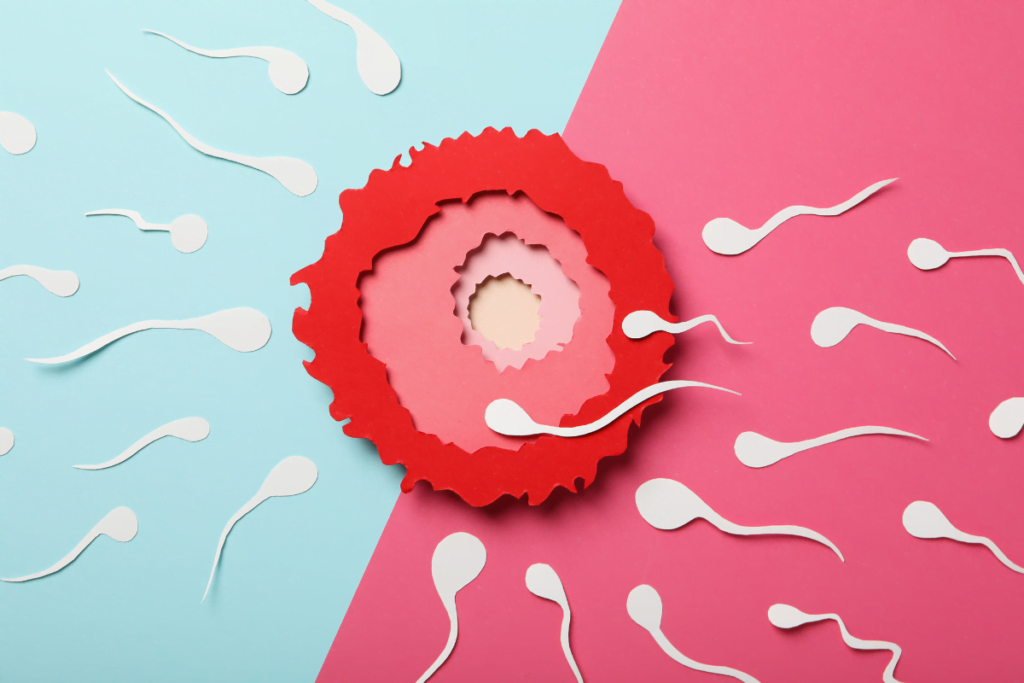
The period is a reflection of the fact that there has been no implantation of a fertilized egg. Consequently, the levels of the hormone progesterone drop, and a bleeding episode occurs as the uterine lining is shed. The bleeding can last anywhere between 3 and 7 days, and the menstrual flow is generally light at the onset, peaks on days 2 and 3 and is followed by a tapering of flow. It is a reset of the body’s menstrual cycle. Implantation bleeding occurs when a fertilised egg attaches to the lining of the uterus, which can cause some of the tiny blood vessels to break, which then causes a small amount of blood to be released. In my clinical experience, many patients have been able to explain to me the process of implantation bleeding and typically, in my experience, only 15% to 25% of women report seeing the bleeding. Also, the absence of this bleeding in no way indicates that something has gone wrong.
Implantation Bleeding vs. Menstrual Period: History of Comparison
| Implantation Bleeding | Menstrual Period |
| Timing: 6 to 12 days post-ovulation | Timing: 12 to 14 days post-ovulation |
| Color: Light pink to brown | Color: Bright red to dark red |
| Flow: Very light, only spotting | Flow: Light to heavy, increases |
| Duration: A few hours to 2 days | Duration: 3 to 7 days |
| Clots: None | Clots: Common on heavy days |
| Cramping: Mild twinges or a dull ache | Cramping: Moderate to severe |
5 Clinical Clues that I use to Distinguish the Two
1. Timing is the best clue.
Implantation bleeding occurs about 6 to 12 days post-ovulation, which is less than the expected period. If you have been tracking your ovulation and you have some spotting about a week or so before your expected period, then implantation bleeding should be a consideration.
2. Different types of blood have different colors.
For example, blood occurring during periods is bright red because the blood is new and coming from the uterine lining. In contrast, blood from an implantation is referred to as implantation bleeding and is typically light pink or brown. This is due to the color being further from the source of the bleeding and traveling from the uterine wall. If you notice bright red blood, it is best to contact your healthcare provider.
3. Volume is an obvious factor to consider.
In the course of a menstrual cycle, the flow will eventually build up enough to warrant the wear of a tampon or pad and is likely to build up in the first couple of days. Implantation bleeding, however, is a significantly smaller amount of blood and will likely only be enough to warrant a panty liner, if that.
4. Implantation bleeding is an event that is characterized by brief and non-progressive bleeding.
In contrast, a menstrual cycle is an event that lasts between 3 and 7 days and often has a distinguishable pattern to it, beginning as light, building up to heavy, and eventually tapering off. In contrast, implantation bleeding lasts only a couple of hours and will rarely extend beyond a couple of days. In fact, periods will often stop and restart, which is something that, during the course of the bleed, a period will often do.
5. Quality of cramping differs greatly.
Menstrual cramps feel sharp and come from a uterus that’s actively contracting and trying to push out the lining. The cramps can be experienced in the back as well. Implantation cramps feel a pull, and they can be a dull,l persistent ache. The sensation is not meant to worsen. If a patient is telling me that the cramps were severe enough to cause a distraction, my brain is thinking period. Not implantation.
Signs Suggesting Possible Early Pregnancy
What I consider when there’s implantation bleeding with other symptoms is the most important part of the assessment. Examples include:
- Mild nausea can begin around the same time as spotting.
- Breast tenderness can feel stronger than the usual PMS.
- A metallic taste may also be considered. It is a surprisingly common early pregnancy symptom.
- Heightened sensitivity to smell and fatigue beyond your usual cycle can also occur.
At Valley Fertility Centre, I see many patients who have jumped to the conclusion that these signs are pregnancy symptoms when they really are not. The combination of these symptoms and a light pink might be reason enough to take a test for pregnancy when the time for your period arrives.
When and How to Confirm What You Are Experiencing
In most cases, a positive pregnancy test can confirm implantation. However, testing during the spotting can often be too early, as it takes a few days for the hCG to rise to detectable levels. I tell my patients to test on the day of the expected period and if it is negative, to test again in 3 days. Women with irregular cycles are better off getting a beta-HCG blood test, as it is more definitive. If the hCG levels rise appropriately over a 48-hour period, that is diagnostic of a developing pregnancy. Women who track their AMH levels and their fertility tend to be more in tune with their cycles. This tends to lead to better awareness and makes spotting less stressful.
When to Contact a Doctor Urgently
Reach out to your physician if you have:
- Heavier than normal implantation bleeding with blood clots
- Sharp one-sided pelvic pain with any associated bleeding (possible ectopic pregnancy)
- Positive pregnancy test with blood loss
- Any bleeding lasting longer than 3 days with a delayed period
Frequently Asked Questions
Q1: What is the average time bleeding lasts during implantation?
Implantation bleeding can last anywhere from a few minutes to a couple of days. Anything longer than a couple of days is a cause for concern and could be from a serious medical condition.
Q2: Is it possible for implantation bleeding to be as heavy as a period?
No. Implantation bleeding should be light enough that you would not even need to wear a pad. If you find yourself bleeding that is heavy enough to require a pad, you should seek medical attention.
Q3: Is it possible to have implantation bleeding and not feel pregnant?
Yes, it’s possible to have implantation bleeding and not have any other symptoms. That is also the reason why a lot of people rely on taking a pregnancy test.
Q4: Is it possible to take a pregnancy test during implantation bleeding?
Do not take a pregnancy test during implantation bleeding, as the result may be inaccurate. Wait until the day of your expected period for the most accurate result.
Q5: If there is no implantation bleeding, does this mean that the embryo did not implant?
Not at all. Only 15 to 25% of women detect any kind of spotting at implantation. It is completely normal and not indicative of any issues with the pregnancy.

Dr. Bunafsha Subhani
Infertility Specialist
Obstetrics and gynaecology doctor with Specialization in IVF.