 Book Appointment

IVF Success Rate by Age in Srinagar (2026) | IVF Success Rate by Age in Srinagar: Day 3 vs Day 5 Guide
A day-by-day, age-by-age guide to what really affects your chances
If you’re researching IVF in Srinagar, you’ve probably already noticed that every clinic quotes a different “success rate.” The truth is simpler than the marketing: your age is the single biggest factor in how IVF turns out, and the day your embryo is transferred Day 3 or Day 5 changes the odds again within that. This guide walks through both, in plain language, so you know what questions to ask before you start.
Understanding IVF Success Rate by Age in Srinagar 2026 helps couples make informed decisions before beginning fertility treatment.
IVF Success Rate by Age in Srinagar 2026: The Real Numbers
Age affects two things at once how many eggs you have left, and how many of those eggs are chromosomally normal. Both numbers fall gradually through your early thirties, then drop more sharply after 35. Here’s what that looks like in practice, using benchmarks from well-equipped Indian fertility centres.
| Age Group | Clinical Pregnancy Rate | Live Birth Rate (per cycle) | Cumulative (3 cycles) |
|---|---|---|---|
| Under 30 | 50–60% | 45–58% | 78–87% |
| 30–34 | 45–55% | 40–52% | 70–82% |
| 35–37 | 35–45% | 30–42% | 58–70% |
| 38–40 | 25–35% | 18–32% | 42–58% |
| 41–42 | 15–25% | 10–18% | 25–40% |
| Above 42 | 5–15% | 5–10% | 15–25% |
The IVF Success Rate by Age in Srinagar 2026 generally decreases with increasing maternal age because both egg quantity and egg quality decline over time.
A quick note on the two rates in that table: “clinical pregnancy” means a heartbeat showed up on ultrasound. “Live birth” means a baby actually arrived. The gap between the two widens with age, mainly because miscarriage risk rises as egg quality declines. And don’t let a single-cycle number discourage you the cumulative column (after two or three attempts) is usually the more honest picture, especially if you’re under 37.
Many couples researching IVF Success Rate by Age in Srinagar 2026 also want to know whether a Day 3 or Day 5 embryo transfer offers better chances.
IVF Success Rate by Age in Srinagar 2026: Day 3 vs Day 5 Embryo Transfer
Embryos can be transferred on Day 3, when they’re still a cluster of 6–8 cells, or on Day 5–6, once they’ve developed into a blastocyst. This is a separate decision from your age, but the two interact closely.
| Transfer Day | What Happens | Typical Effect on Success |
|---|---|---|
| Day 3 (cleavage stage) | Embryo hasn’t yet shown which ones are strongest | Used when there are fewer embryos to work with; slightly lower per-transfer success in most age groups |
| Day 5–6 (blastocyst) | Only embryos capable of continued growth make it this far a natural quality filter | Usually a higher implantation rate, most noticeably for women under 38 |
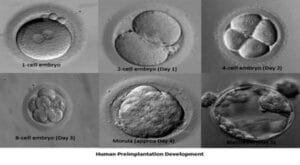
If you’re under 35 with several good embryos, going to Day 5 usually helps your embryologist pick the one most likely to succeed, since weaker embryos tend to stop developing before they get there. If you’re over 38 or only have one or two embryos, some clinics prefer Day 3, on the theory that your uterus may be a better environment than a lab dish for those extra two days. There’s no universal right answer ask your embryologist which day they’d recommend for your embryo count and why.
Single vs Double Embryo Transfer
It’s tempting to think two embryos double your chances, but most well-run clinics now default to transferring one embryo at a time. Twin pregnancies carry real added risk, especially past 35, and the extra success rate from a second embryo is usually small. If a clinic suggests transferring two without first discussing a single-embryo option, it’s worth asking why.
Single vs Double Embryo

Frozen Embryo Transfer (FET) Success Rates
Freezing embryos and transferring them later has become common practice, partly because it lets the uterine lining be prepared separately from ovarian stimulation. FET success rates are generally on par with and sometimes slightly better than fresh transfers, and a frozen transfer usually costs less than a full fresh cycle since retrieval has already happened.
Your IVF Success Rate by Age in Srinagar 2026 is influenced not only by age but also by AMH levels, ovarian reserve, and embryo quality.
AMH and Ovarian Reserve by Age
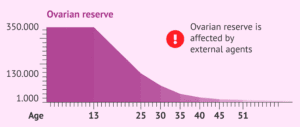
AMH (Anti-Müllerian Hormone) is the blood test most clinics use to estimate how many eggs you have left. It tends to decline steadily with age, though it varies a lot person to person. Lower AMH usually means fewer eggs retrieved, which means fewer embryos reaching Day 5. If your AMH is low for your age, your clinic may lean toward Day 3 transfer simply to avoid losing embryos to extended lab culture.
PGT-A Genetic Testing and Age
Chromosomal abnormalities in embryos become more common as you age, which is why PGT-A (genetic screening before transfer) is more often recommended past 38, or after repeated failed cycles or pregnancy losses. It’s worth knowing that PGT-A requires a Day 5 biopsy — it can’t be done on a Day 3 embryo so age, transfer day, and genetic testing tend to be one combined conversation with your clinic, not three separate ones.
Why Does Success Really Decline With Age?
- Fewer eggs each cycle ovarian reserve naturally falls, leaving fewer embryos to choose from.
- More chromosomal abnormalities a bigger share of eggs (and embryos) carry abnormalities as you age, which is the main reason blastocyst formation and pregnancy rates drop.
- Uterine changes less significant than egg quality, but fibroids or prior surgery can play a role.
- Sperm quality an independent factor worth checking alongside age-related planning.
Questions Worth Asking Your Clinic
- What are your pregnancy and live-birth rates for my age group specifically not your clinic average?
- Would you recommend Day 3 or Day 5 transfer for my embryo count, and why?
- If I have several good embryos, would you suggest single or double embryo transfer?
- What’s my AMH, and how does it affect how many embryos are likely to reach Day 5?
- Would PGT-A make sense given my age and embryo count?
- What would my odds look like over two or three cycles, not just one?
These are some of the most common questions about IVF Success Rate by Age in Srinagar 2026.
IVF Success Rate by Age in Srinagar 2026 FAQs
- Does the transfer day matter more than age?
No age is still the dominant factor. Transfer day can shift your odds by a few percentage points within an age group, but it doesn’t override the effect of maternal age on egg quality and quantity.
- Is Day 5 transfer always better than Day 3?
Not always. Day 5 tends to improve success when there are several good embryos to choose from. With very few embryos, some clinics prefer Day 3 to avoid losing them during extended lab culture.
- Do cumulative success rates matter more than single-cycle rates?
For many patients, yes. A single cycle can understate your real prospects especially under 37, where cumulative success over two or three cycles rises substantially compared to any one attempt.
- Can genetic testing be done on a Day 3 embryo?
Standard PGT-A requires a Day 5 blastocyst biopsy it isn’t performed on Day 3 embryos in most current protocols.
Image of couple with a baby and valley fertility in the background
The Bottom Line
Age is still the biggest factor in your IVF outcome, but it doesn’t act alone embryo transfer day, embryo count, AMH, and whether genetic testing is used all shape your realistic odds. The most useful thing you can do is ask any centre for pregnancy and live-birth rates specific to your age group and transfer plan, rather than relying on a clinic’s overall published average.
Understanding the IVF Success Rate by Age in Srinagar 2026 allows patients to have realistic expectations and discuss personalised treatment plans with their fertility specialist.

References
- Indian Council of Medical Research (ICMR): https://www.icmr.gov.in/
- American Society for Reproductive Medicine (ASRM): https://www.asrm.org/
- European Society of Human Reproduction and Embryology (ESHRE): https://www.eshre.eu/
- World Health Organization (WHO) – Infertility: https://www.who.int/news-room/fact-sheets/detail/infertility
Contact Us
Have questions about your treatment plan or want a personalised cost estimate based on your own reports? Get in touch with our team today we’re happy to walk you through your options, explain what a written quotation should include, and help you plan your IVF journey with clarity.
📞 Phone: 9419068448
✉️ Email: info@valleyfertilitycentre.com
📍 Address: Gulshan Nagar, Nowgam, Srinagar, Jammu & Kashmir -190015
🔗 Book a Consultation: Contact us now!